
Teresa de Rogatis (1893-1979). Rogatis was an Italian player with a considerable reputation. For a long time she taught in Cairo and helped to found the National Conservatory of Egypt. She also wrote a number of compositions, for piano as well as guitar, which have since been recorded. There is also a home recording of Rogatis playing. I can scarcely believe she is 81 here — the playing is very good:
Alfred Cottin (1863-1923). Cottin was a French guitarist and mandolinist who is now best remembered for being the dedicatee of Tarrega’s Recuerdos de la Alhambra. He was also a performer, composer and teacher in his own right, and left a guitar method in which he says to play without nails. (I think it is quite a delicious fact that the dedicatee for the most famous tremolo piece was a no-nail player!)
John Duarte (1919-2003). Apparently Duarte played without nails partly out of physical necessity — as a research chemist, growing out nails impeded his ability to handle delicate apparatus, according to his friend, Terry Usher. Usher complimented Duarte’s tone, though suggested it was quieter than it might be with nails. However, according to his son, Christopher, Duarte definitely grew nails at a later point, probably c. 1960s.
He is now best known for his compositions — someone recently put it to me that he is the most recorded guitar composer (I’ve no idea if true, but there are certainly a lot of recordings). In his lifetime, he exerted a broader influence. He famously taught a young John Williams, and his writings and reviews were a constant feature of the guitar scene — not infrequently sparking controversy.
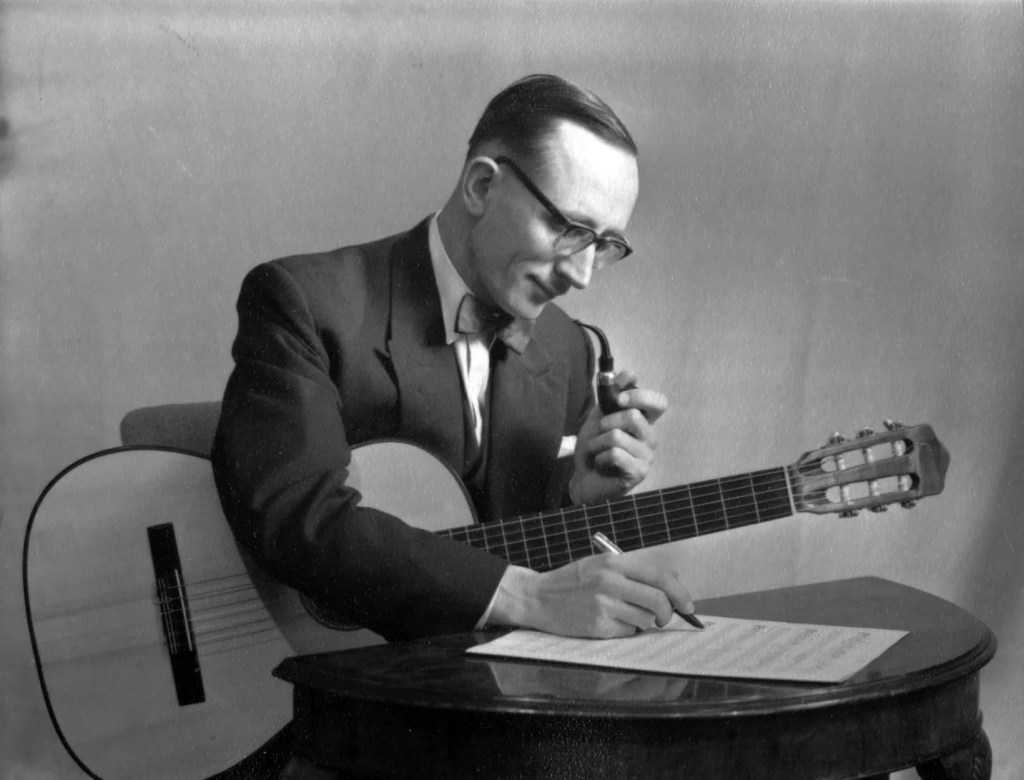
Jean Fuller (1927-1950). Fuller was a very promising player who died far too young, age only 23. He was a French guitarist, but in the late 1940s he was developing quite a name for himself in Britain. He was on British and French radio, and even made an appearance on BBC television. His Wigmore Hall debut was in 1950; The Times reviewed the concert: ‘‘Mr. Fuller has the feeling for style that allows him to control his natural virtuosity in less spectacular pieces, to avoid kaleidoscopic changes of registration without risking monotony. His playing was everywhere clean, rhythmical, and musicianly.’’ He died following a recital in Singapore; his aircraft crashed in the gulf during a tropical storm. I intend to write a page for him soon.
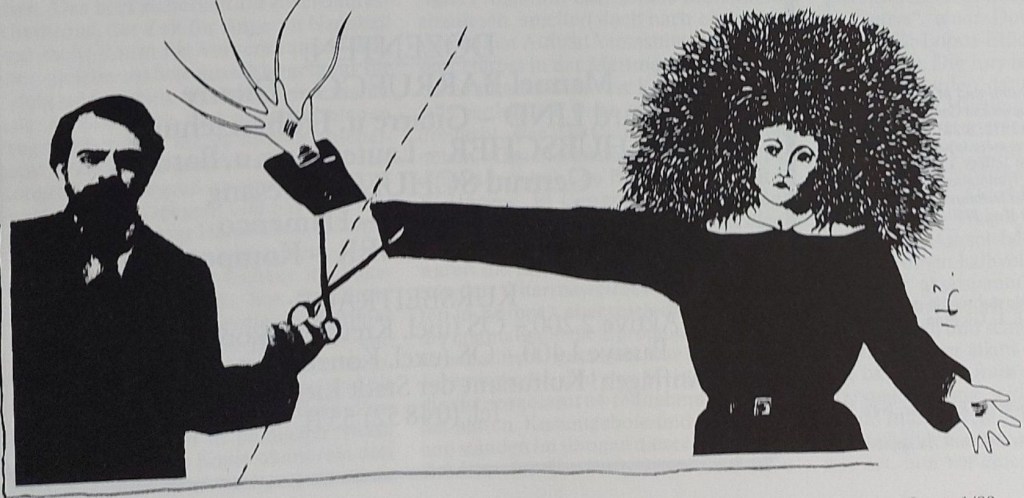
As an envoi, here’s Tarrega cutting off Struwwelpieter’s hand, from a 1988 German article on the historical controversy around nail use:
 No-Nail Guitar
Leave a comment