
This paper was presented at the IGRC Conference, Surrey, March 2026.
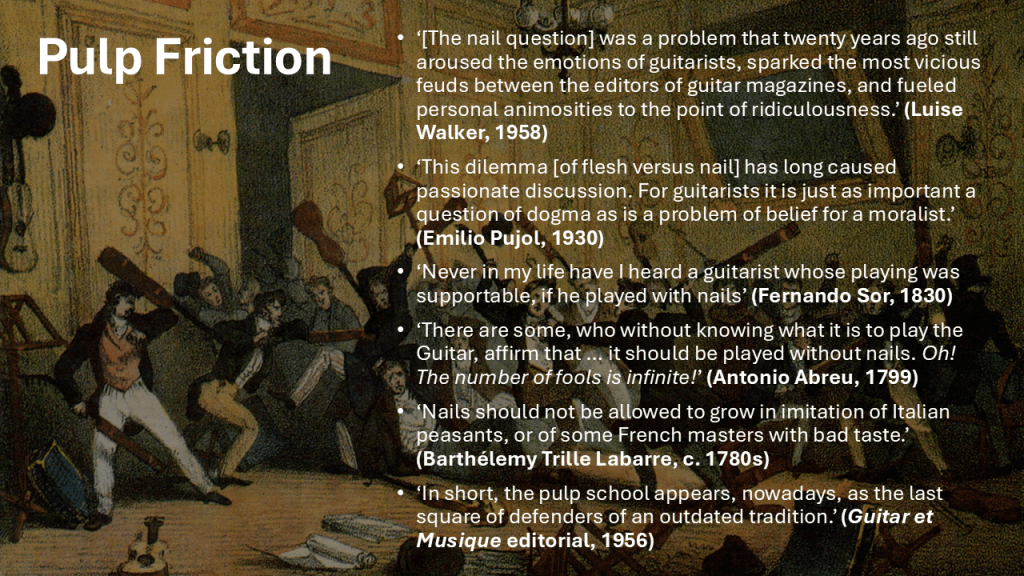
Over the last quarter of a millennium, has there been any guitar technique that has provoked such longstanding controversy as the question of whether or not to use nails? In some ways the question is peculiar to the guitar’s classical history. Yes, it appears on some other plucked instruments, but not on the same scale, and not as entertainingly, as on guitar. Moreover, when it does appear on other instruments it strongly correlates with subtype of instrument: the pedal harp, for example, is always played without nails, while the Paraguayan or modern celtic harps are commonly played with nails. Yet on the guitar, players were using the same instruments, the same strings, the same repertoire — both with and without nails.
Naturally, this tended towards conflict, as both were trying to occupy the same territory. For most of the guitar’s history, with the exception of Spain, flesh playing predominated and so the attacks were usually directed against nail use. Nineteenth century methods describe nails as, and I quote, jingling, jarring, twanging, wiry, impure, screeching, clinking, shrill — you get the idea.
In the first half of the twentieth century the number of capable nail players progressively increased, and so it became harder to dismiss this way of playing. For a time there was a kind of uneasy co-existence between the two techniques. But this didn’t last, and in the second half of the century we entered a period – which I must emphasise was historically novel – where, for the first time, nail playing became the default method for most guitarists around the world and no-nail technique was gradually forgotten.
It’s a tale of two histories, as it were. It’s as if a mirror divides classical guitar history, so that one period is the reverse of the other. The claims that nineteenth century authors made against nail use now sound ridiculous. I don’t think anyone today could convincingly argue that they have never heard a guitarist whose playing was supportable if he used nails, as Fernando Sor wrote. However, for the past several decades we’ve been in a sort of mirror culture where similar criticisms are made of flesh players.
Mostly, the nineteenth century arguments about nails – in either direction – had to do with timbre. The chief criticism of nail playing was that nails sound harsh or shrill. The more harp-like sound of the flesh was held up as an ideal, whereas nails were often associated with an unrefined and less respectable way of playing. One mid-nineteenth century German guitarist, Otto Feder, went as far as to blame Spanish guitarists for the widespread belief that the guitar is incapable of classical music, owing to their use of nails and associated showy effects.
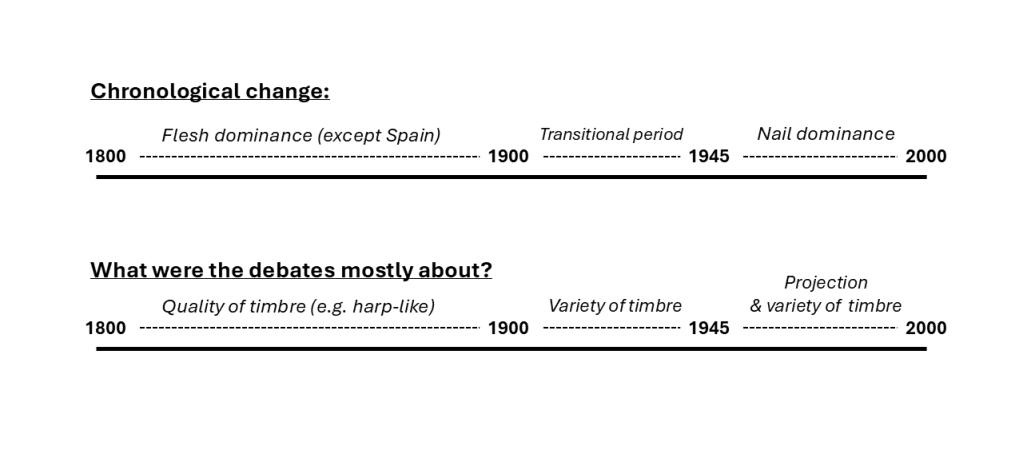
As the twentieth century progressed, timbre was still a feature of the nail debate, though more often it had to do with variety of timbre as opposed to the general quality of timbre; the most common criticism of no nail players in the first half of the twentieth century was that their sound was monotonous. Increasingly, however, especially in the second half of the century, the debate revolved around projection, which had seldom been an issue before. I have, very crudely, mapped this chronologically. The newfound emphasis on projection was perhaps a result of the neurosis, particularly in the Segovian period, about the guitar’s presence in large concert halls.
A related argument is that no nail playing is an historical technique unsuited to the modern guitar. A perfect example of this is John Mills’ discussion of the subject in his 1981 method:
It is true that many of the guitarists of past eras did not use nails … In earlier times, guitarists were only expected to play in music rooms, salons, ballrooms, chapels, small theatres, etc., where the lower volume level they produced did not matter. If you look at photographs of early guitars … you will notice the smaller dimensions of the body, and very often the short string length. Not only did guitarists play more softly, the instruments too were not as powerful.
This is a common refrain. It’s become so pervasive that even some no-nail players repeat it. It’s almost like a folktale designed to scare players away from flesh playing. You are told that you’ll lose all your power, like Samson cutting off his hair.
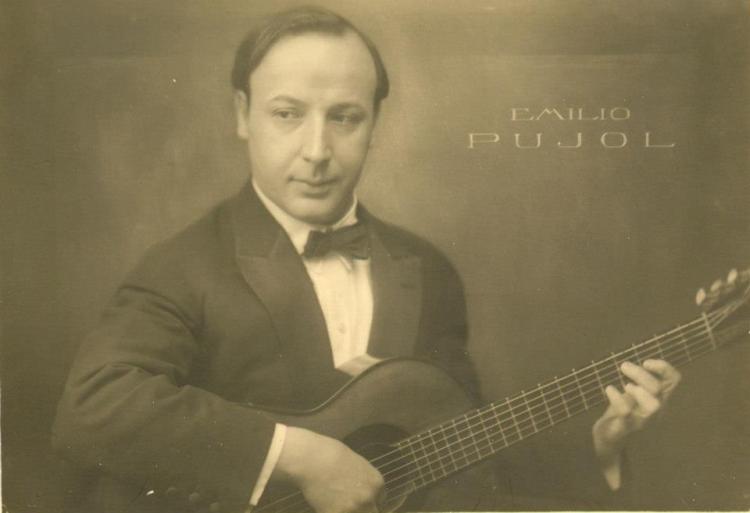
The first thing to point out is that historical guitars were not necessarily lower tension. People assume this, not unreasonably, because it is indeed true that on other instruments, such as harp and piano, string tension increased considerably from the nineteenth to twentieth centuries. However, the current research on guitar string tensions, done by Mimmo Peruffo, shows that many early guitars had a comparable, if not greater tension, than most guitarists use today. In fact, contrary to what most expect, the advent of universal nail playing appears to correlate with a lower string tension. Just before the introduction of nylon strings, Emilio Pujol, who of course played without nails, gave measurements for the top gut string that equate to a tension of about 8.3kg. By contrast, D’addario Extra High Tension strings have a tension of only 7.9kg.
Secondly, most historic methods do not indicate a softer way of playing – the more usual adjective is ‘forcefully’. Indeed, many methods suggests a default playing position that is nearer the bridge than we might play today. Thirdly, no nail playing was present well into the second half of the twentieth century – with no-nail guitarists playing in concert halls and in concerti, on modern instruments and, yes, on nylon strings. I have not only many accounts, but also recordings to prove it.
Part of problem is that we have this binary idea of nail and flesh playing being distinct and very different ways of playing. This isn’t really the case. There are many ways to play without nails, just as there are many ways to play with nails. Today, there is a common style of no-nail playing, usually on historic instruments, which is quite gentle. As I said, I think this is a kind of historical fiction. I don’t mean the term disapproving. I love historical fiction and often I love the sound, but this way of playing shouldn’t be regarded as what was actually practised historically, let alone as synonymous with no-nail playing as a whole.
Moreover, there are some players who historically and presently alternate between flesh and nail. This is an approach that was largely forgotten by the mid twentieth century, though it’s being modestly revived today. It’s very curious, for example, that until the twentieth century most nail players appear not to have used thumbnail. Of course, it is easy to switch between flesh and the nail on the thumb by raising or lowering the wrist. Moreover, for centuries there have been players who alternated between flesh and nail on their fingers. This is more complicated: you can do this by alternating your hand position, either by rotating the wrist or opening or closing the hand. It is also the case that you can get a fairly naily sound without nails, just as a nail player can get a fleshy sound.
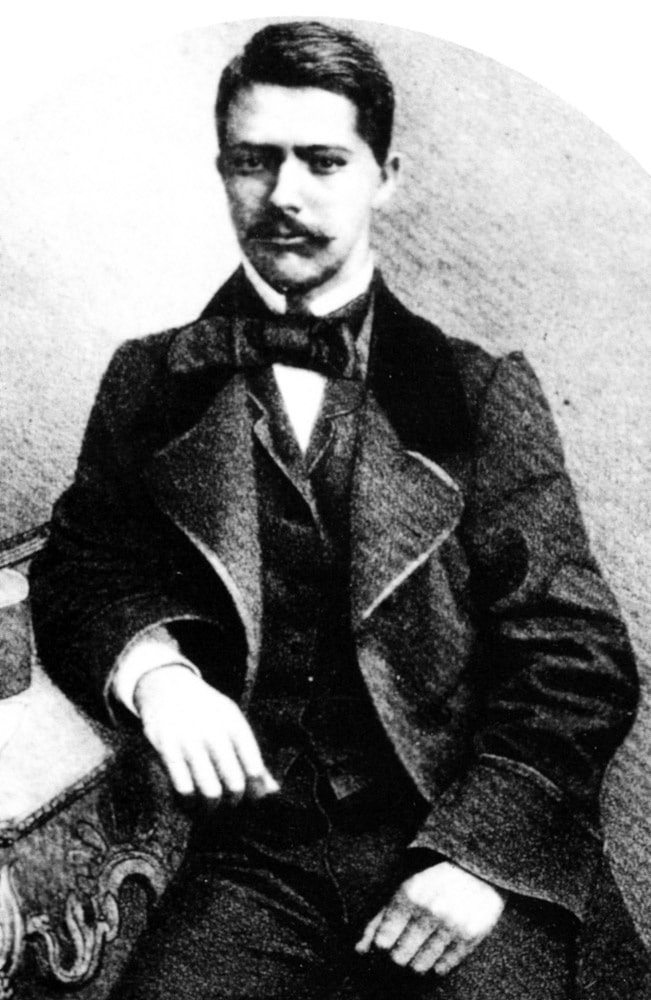
These grey areas can cause some confusion. There is sometimes a related debate about whether or not someone is using nails, partly because of this. Take Julian Arcas, for example: there are two good sources that mention his nails – one says he used them, the other says he didn’t. Several players in the twentieth century were at one time or another rumoured to have played without nails, when they in fact used nails. Perhaps most surprising of all is this 1931 comment about Segovia by the editor of Crescendo magazine:
I have heard the great Spaniard five times, and have interviewed him twice, and have sat at two concerts close enough to him to notice his method of attack, and not once did I detect him picking the strings with the nails of his right hand. A few Mexican players have used this method at times, but I am quite positive that none of our virtuosi to-day would indulge in it.
Today, a similar incredulity is sometimes directed towards us flesh players. When Brandon Acker began playing without nails and making videos about it, he received comments by some listeners who simply did not believe him. There is a neurosis and an insecurity in the debate, a sense of wanting to know who your allies are, close-mindedly disliking ambiguities, and not wanting to be on the wrong side.
Another source of rumour was Tárrega’s conversion to no-nail playing in 1902 – an historically unprecedented event which resounded down the century. Yet curiously, there is almost no documentary evidence of his conversion until decades later. One tends to think of this kind of delay as characteristic of ancient history, but here it is, to an astonishing degree, in the twentieth century. The two main accounts are given by Domingo Prat and Emilio Pujol, around the late 1920s — and they don’t agree at all. They give different years. They give different reasons. Prat started a rumour that Tárrega converted because of medical issues. There is little evidence for this being more than a pernicious rumour, but that hasn’t stopped it enduring to this day. Pujol, on the other hand, says it was purely an aesthetic choice. Both also give different accounts of what Tárrega sounded like after cutting his nails.
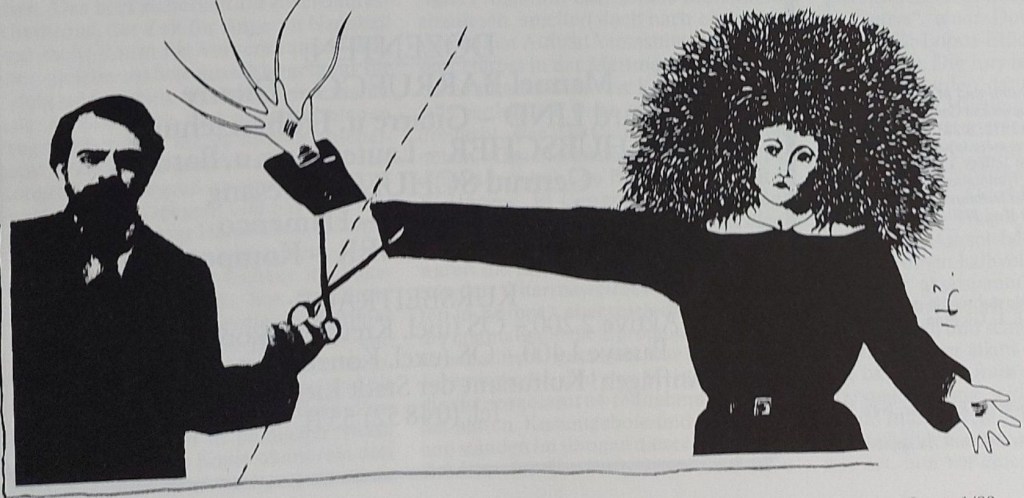
Tárrega was a mythological figure – and I don’t mean this disapprovingly. He was for many – and is to some extent for me too – a symbol, a saint, a master. For some, the ideal Tárrega was pre-conversion, for others the ideal Tárrega was post-conversion. The debate about his conversion sometimes had little to do with history, or sound, or even nails. Indeed, the debate over nails is often about other things, with the nails serving as a proxy. Emilio Pujol wrote that nail and flesh are dual aspects of the guitar that reflect our personalities – the introvert vs the extravert. Segovia said that to play without nails, as Tarrega did, is ‘to renounce the real nature of the guitar’ – whatever that is.
There is something about fingernails. They have a peculiar power and symbolic significance. The nail is an essential symbol for the modern classical guitarist. Long before I took up classical guitar, I distinctly remember as a young child meeting a colleague of my mother’s — they were both library assistants — and he had long strange nails on one hand. I remember my mother telling me that this was because he was a guitarist. The idea had a mysterious and even slightly suspect quality — like something particular to a secret society.
It’s curious how often nails are associated with the sinister. Various stories I most enjoyed as a child demonstrate the potentially scarifying quality of fingernails. The claws possessed by Roald Dahl’s witches. Or the nails of Struwwelpeter. Or the Scissorhands of the eponymous Edward. These were the sources of some of my most memorable nightmares. (It’s no wonder I became a no-nail guitarist.) In paintings you find long nails on demonic figures, for example, but almost never on respectable persons. Long nails were often associated with lack of cleanliness, low class status, or a kind of negative eroticism. In the minds of some Europeans, this negative association was also linked to foreignness. There are several disparaging remarks in guitar-related sources to Mandarine, Tatar, Italian peasant, and, of course, Spanish nails.
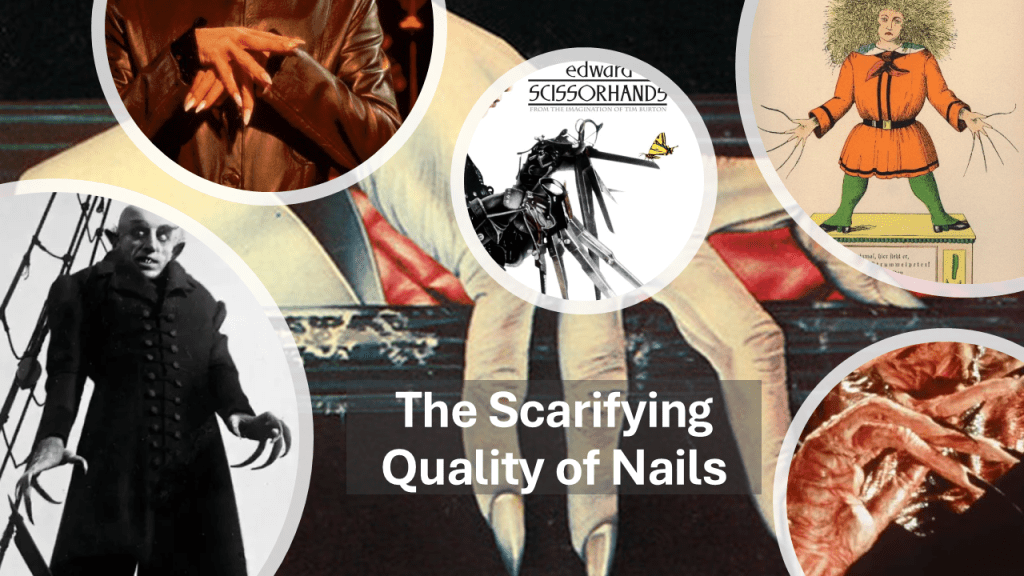
Nails can elicit dual and diametric responses. They can inspire disgust and arousal, say. Think how Dracula uses his long sharp nails to open a vein in his breast, from which Mina drinks. Nails can also have an aggressive quality, as many a schoolchild knows well. Yet despite this weapon-like quality, nails are also vulnerable parts of the body — a fragility that engenders insecurity — a common anxiety for guitarists. Nails can also be strangely compulsive — the mysterious habit of nail biting, for example, which attracts and repulses in equal measure.
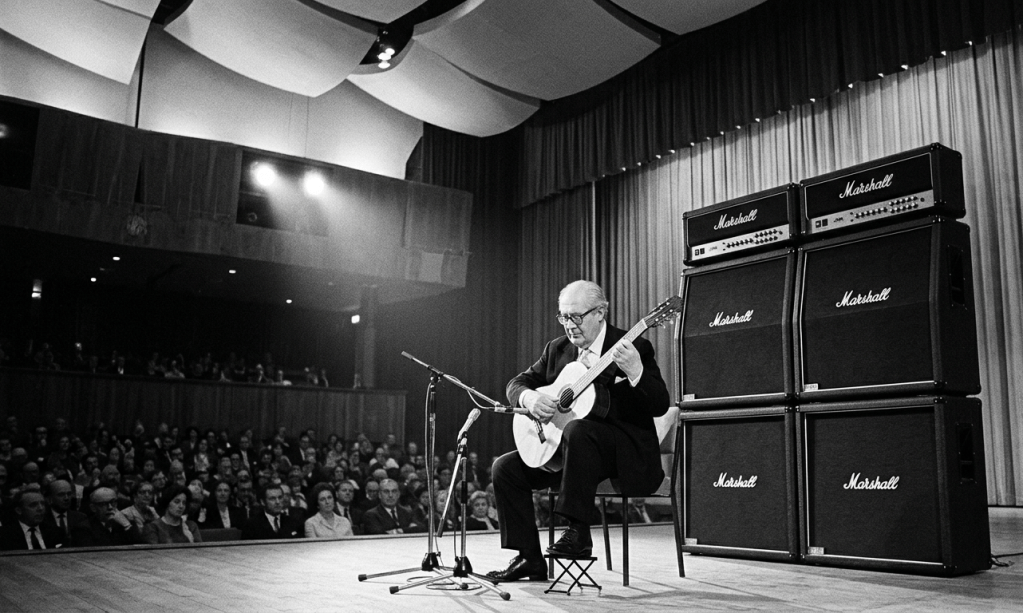
Most of all, among guitarists, there is a perception that nails are a power — not just in terms of sonority, but something greater still — and that the no-nail player has lost this preternatural support. Superhuman powers are attributed to the cluster of dead cells on the end of one’s fingers: Segovia said that it’s on account of his nails that he can fill the royal festival hall with but a single harmonic, as if his nails had the power of a 100 watt amplifier. On the other hand, flesh advocates have sometimes implied that nails permit a kind of devilish power. Some historic guitar sources imply that nails are an instrument of tricks and base excitements – what Pujol called ‘deplorable musical illusionism’. For the vihuelist Miguel de Fuenllana, ‘Only the finger, the living thing, can communicate the intentions of the spirit’.
I disagree, I hasten to add. But the dichotomy was apparently persuasive for many. Let us end with a quotation by Emilio Pujol which demonstrates this. He wrote in 1930 that
This dilemma [of flesh versus nail] has long caused passionate discussion. For guitarists it is just as important a question of dogma as is a problem of belief for a moralist. The aesthetic opinion of each partisan reflects his personal nature. Each preference requires an attitude distinctive from the rest and finally leads to diametrically opposed positions.
 No-Nail Guitar