
Born in Cuba, Garcia received both a Master of Guitar and Master of Music from Havana’s Peyrellade Conservatory in 1954. Upon graduation he was invited to join the faculty. However, following the revolution, Garcia fled Cuba for the United States. In 1961 he joined the Brigade 2506 who carried out the ill-fated Bay of Pigs operation to overthrow the Castro regime. He was captured and held prisoner for a year.
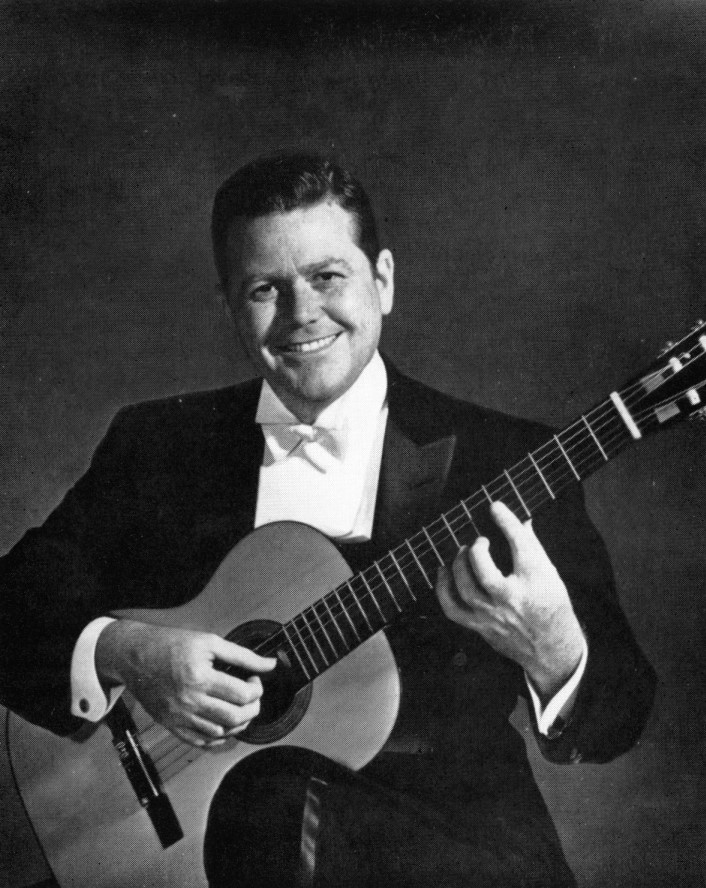
Possessing an indefatigable devotion to the guitar, he somehow managed to convince his captors to bring him one. He would practise day and night. As well as teaching prisoners, he would sometimes entertain the guards. But on other occasions his playing would anger the guards and they would lock him in solitary confinement. After being randsomed on Christmas Eve 1962 he appeared, believe it or not, on the Ed Sullivan Show, along with some of the other prisoners, to perform ‘Day-O’.1
He moved to Albuquerque and resumed performing and teaching. He established a guitar programme at the University of New Mexico in 1968, where he remained until 1984. He continued to perform around the world, both as a soloist and with orchestras. In 1988 he was given the New Mexico Governor’s Award for Excellence and Achievements in the Arts.
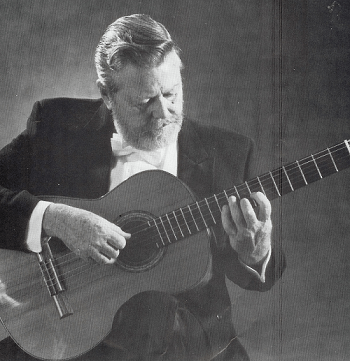
An excerpt from a 1967 review of Garcia’s performance at the Wigmore Hall testifies to his playing:
‘Taken as a whole, the concert was thoroughly enjoyable; his performance of Bach’s Chaconne was played with brilliant and superlative artistry, and he obtained many delicious and colourful sounds from his instrument. The Minuets by Rameau and the Study by Coste were also beautifully played , as were also Asturias by Albeniz, the Pujol studies, and the fine new composition by Castelnuovo-Tedesco. Two encores only were called for in this instance, the first being Tarrega’s famous ‘Recuerdos’ and an unknown composition in Flamenco style which also made good listening. It was a most interesting and enjoyable concert, and we hope that we shall again have the opportunity of hearing Mr. Garcia in the not too-distant future.’2
In the mid 1960s Garcia went to Spain to study with Emilio Pujol, whom he revered. After approximately three years he decided to cut off his nails, following the example of Pujol and Tárrega.3 Pujol told Garcia to wait until a break in his concert schedule, which he duly did. Garcia became very close to Pujol and would return to Spain every summer as an assistant on Pujol’s annual courses, which drew many students from around the world.
I don’t yet have any recordings from after Garcia cut off his nails, but I do have some from when he played with nails. For example, here he is playing Emilio Pujol’s Los Tres Tambores:
Thank you to Karen Cuellar, a student of Garcia, who provided me with much of the information, and whose stories gave such a vivid and memorable portrait of the man.
- https://ctva.biz/US/MusicVariety/EdSullivan_15_(1962-63).htm ↩︎
- Guitar News, 92 (1967), p. 26. ↩︎
- https://rmclassicalguitar.com/interviews/hector-garcia/ ↩︎
 No-Nail Guitar
Leave a comment